
Note: As the two core financial centers in Asia, Hong Kong and Singapore continue to attract investors and companies from all over the world to settle and develop with their open market environment, stable political system and attractive tax policies. This article will conduct a brief comparative analysis focusing on the basic overview, business systems and tax structures of the two places for reference by companies and individuals interested in expanding into the Asian market.
01 Basic information and regional roles
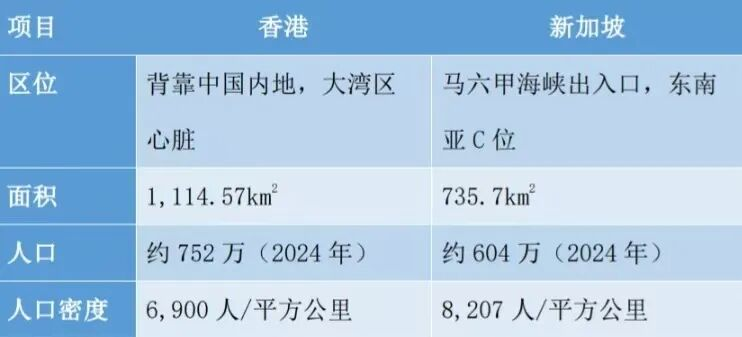
Brief analysis: As a special administrative region of China, Hong Kong’s development path relies heavily on the mainland’s economic system and plays a bridge role as a “super contact”. Singapore is a sovereign country. With its independent political system and stable governance model, Singapore plays a strategic hub among ASEAN countries and forms a high-frequency "air commuting circle" with Malaysia, Indonesia, Thailand, etc. This makes Singapore often regarded as the first stop for companies to deploy in Southeast Asia.
02 Economic Overview and Cost of Living
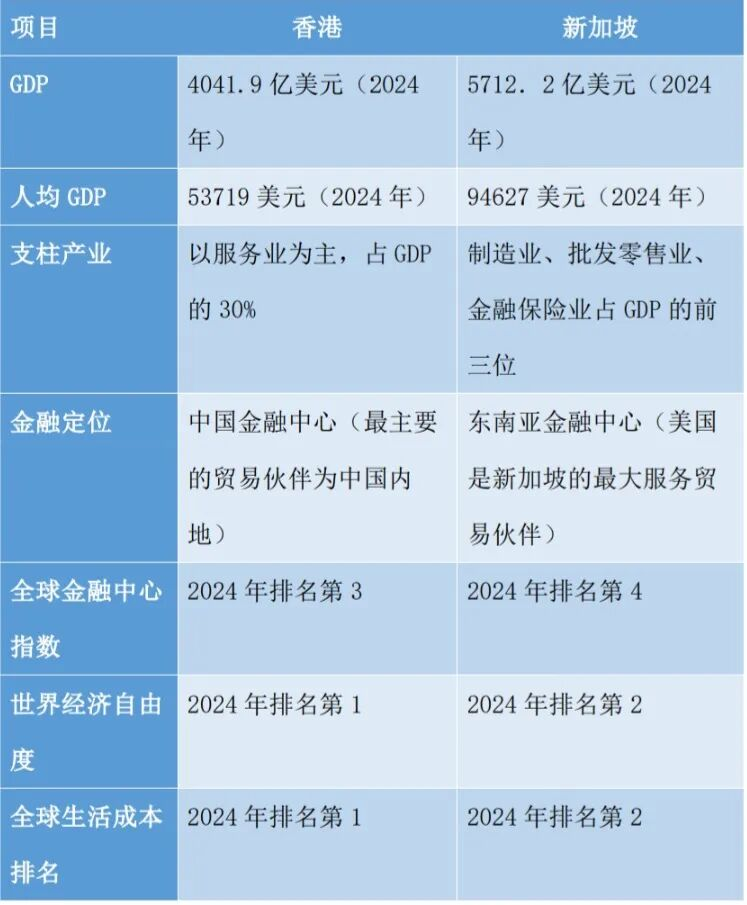
Brief analysis: Although it is often heard that Singapore wants to replace Hong Kong as the financial center of Asia, the gap of hundreds of billions of dollars per year cannot be counterattacked so easily. Hong Kong is the gateway financial center for mainland China to connect to the global capital market, serving the country's financial opening and RMB internationalization strategy. Singapore is a financial and wealth management hub in Southeast Asia. It has close ties with the United States in the field of trade in services and is one of its largest service trade partners. For Hong Kong, the economy is highly dependent on the financial services industry. For Singapore, it has a more diversified industrial structure, and high-end manufacturing is still one of its pillar industries. In terms of cost of living, Singapore is actually much higher than Hong Kong. For example, the cost of buying a car is 3-4 times that of Hong Kong.
03 Company registration and bank account opening
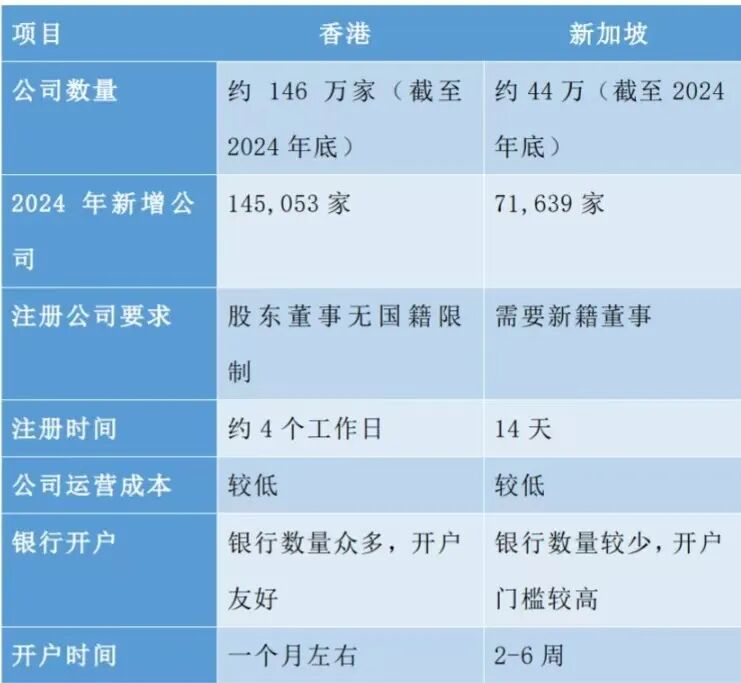
Brief analysis: In terms of company registration process, maintenance costs and account opening convenience, Hong Kong still has certain advantages in system maturity, and the overall operating process is more friendly to small and medium-sized enterprises. Singapore is more stringent in terms of KYC review and bank account prudence, which is suitable for medium and large institutions with long-term compliance development.
04 Tax structure and international agreements
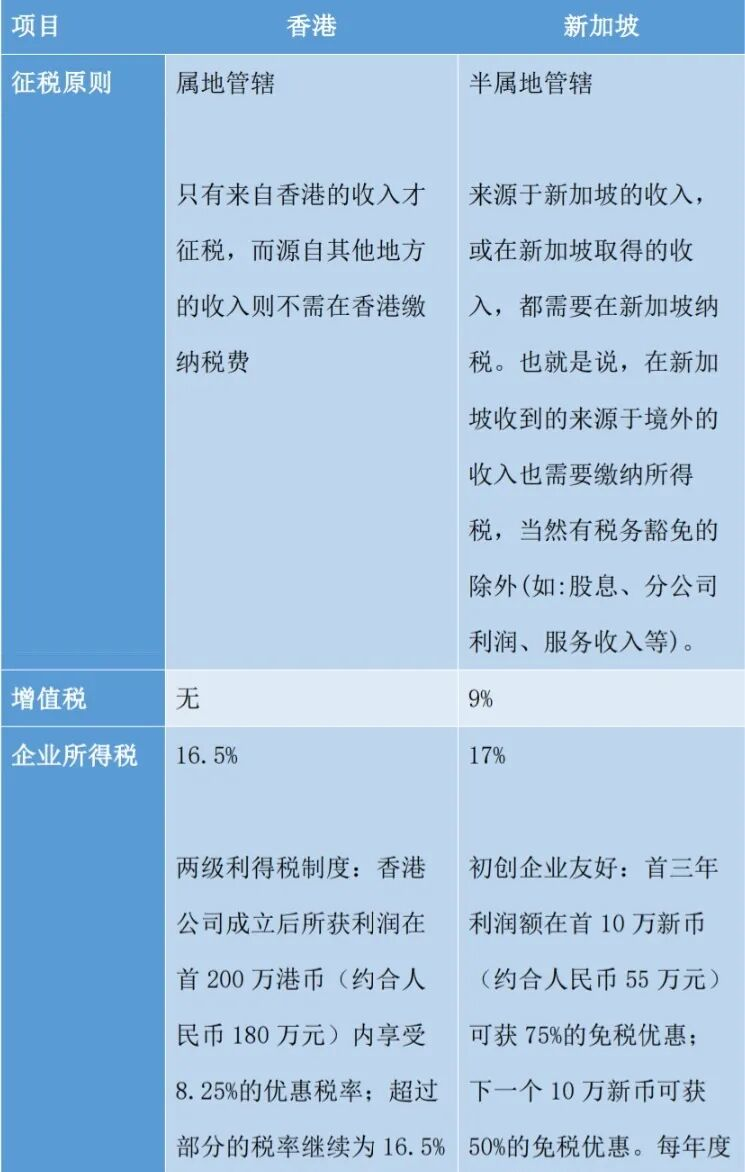
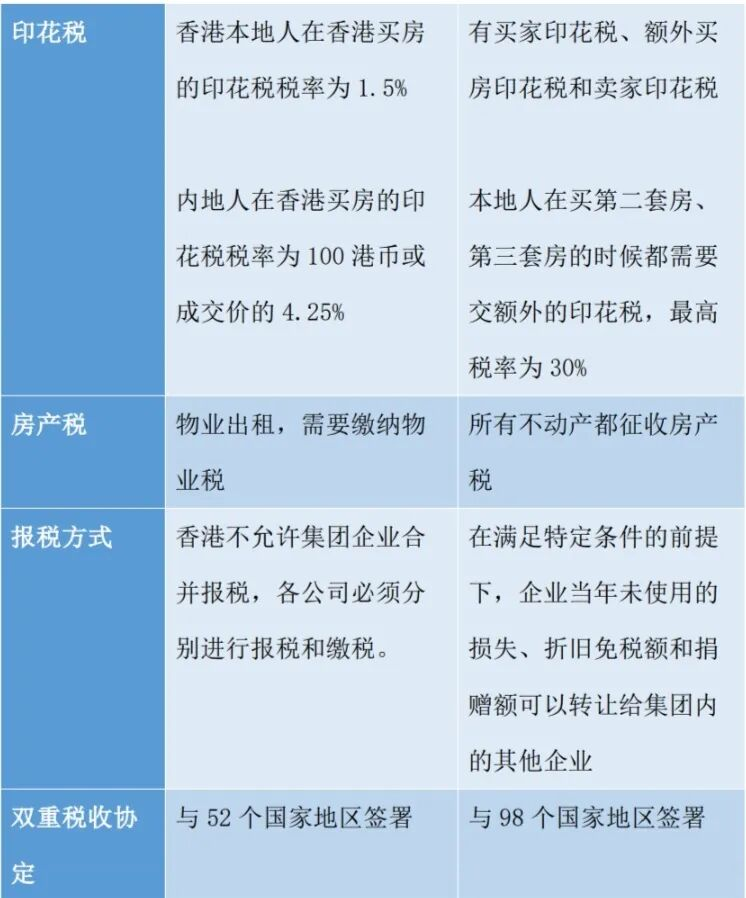
Brief analysis: In terms of tax systems, both places are famous for their "territorial taxation" principle and relatively low tax rates, but each has its own characteristics. Hong Kong's simple tax system (such as no value-added tax), low tax rate and territorial principle are its unique advantages, while Singapore provides a wider range of tax incentives and exemptions to attract foreign companies and investors.
- In terms of personal income tax, the overall tax burden in Singapore is relatively higher than that in Hong Kong, and the amount of taxes levied on high-income groups is on the rise.
- In terms of corporate income tax, Hong Kong’s 16.5% tax rate looks better on paper than Singapore’s 17%. However, Singapore attaches great importance to supporting small enterprises. Start-ups with low profits will have greater tax benefits if they are registered in Singapore; while for medium and large enterprises, Hong Kong's low tax rate has a greater advantage.
- In terms of international agreements, Singapore has signed approximately twice the number of bilateral tax treaties as Hong Kong, which is conducive to global tax planning by multinational enterprises.

Conclusion
Through the comparison of institutional design, tax structure and regional roles, we can see that Hong Kong and Singapore each provide different combinations of opportunities for corporate internationalization and personal cross-border development. Whether seeking low operating costs or tax benefits, companies and individuals need to comprehensively consider the advantages of the two places based on their own strategies and market positioning: not only tax advantages, but also operating costs, industrial advantages, identity planning and other factors - to make the best choice for them.
Whether it is "connecting eastward with mainland China" or "going south and deepening ASEAN", only with precise matching and clear self-positioning can the institutional advantages and strategic value of the two platforms be truly brought into play.
This article is general information and not legal advice. Specific matters require assessment by appropriately qualified professionals.