
Author: Lawyer Zhang Jingxinyue | PRC Practising Lawyer | Singapore Registered Foreign Lawyer
Note: An increasing number of Chinese businesses are establishing companies in Singapore, whether for trade, shipping, hotpot restaurants, artificial intelligence or fintech. Singapore's business convenience, low tax burden, strong international reputation and open but rigorous pro-business approach attract businesses from around the world.
When registering a company, most founders ask: How much share capital is appropriate?
Because the company systems and laws differ, Singapore's rules on registered capital are different from China's in several respects. This article compares the practical approaches in the two countries and highlights issues and risks for cross-border entrepreneurs.

01 Requirements for Registered Capital When Establishing a Company in China
(1) Key Concepts
- Registered capital, also called statutory capital, is the total amount of capital subscribed by all shareholders or promoters under the company's articles of association, registered with the company-registration authority and recorded on the business licence.
- Paid-in capital is the total capital actually received from shareholders when the company is established—the capital actually held in the company's account. If shareholders subscribe RMB 1 million but pay only RMB 500,000, the RMB 500,000 is the paid-in capital.
- Subscribed capital is the amount of registered capital promised to the administration for market regulation. The shareholders may promise to contribute it by a specified date, which is recorded in the articles of association and must not exceed the company's operating term.
Since 1 March 2014, China has changed from a paid-in registration system to a subscription registration system for company capital.
(2) How Does the Subscription Registration System Work?
- The subscription system removes specific requirements on the initial contribution ratio, the deadline for fully paying the contribution and the proportion of monetary contributions to registered capital. Shareholders may agree the amount, method and deadline of their subscribed contribution and record them in the articles of association.
- When establishing a company or registering a capital increase, the market-regulation authority no longer verifies capital. There is no need to engage an accounting firm to issue a capital-verification report.
- Paid-in capital is no longer a matter recorded in the business registration. When a shareholder actually pays the contribution, there is no need to register a change with the market-regulation authority each time.
- The articles do not need to specify a detailed contribution schedule. In practice, they may state broadly that contributions will be made in instalments during the operating term.
(3) What Forms of Contribution Are Permitted? Must the Contribution Be in Renminbi?
Under the Company Law of the PRC, which applies uniformly to domestic and foreign-invested companies, a foreign investor may contribute in cash or in non-monetary property that can be valued in money and legally transferred, such as physical assets, intellectual property and land-use rights.
For a cash contribution, the foreign investor may use foreign exchange or renminbi lawfully obtained in China. The registered capital of a foreign-invested enterprise may be stated in renminbi or another freely convertible currency. A non-monetary contribution must be valued and verified, and the transfer of property rights must be completed in accordance with law.
Article 27 of the Regulation on Company Registration Administration also provides that a shareholder may not contribute services, credit, a natural person's name, goodwill, a franchise right or property subject to security as capital.
Points for Foreign Investment in China
- After the Foreign Investment Law of the PRC took effect on 1 January 2020 and the previous “three foreign-invested enterprise laws” were repealed, the former restrictions on contributions of physical assets and intellectual property by foreign-invested enterprises no longer apply.
- The Foreign Investment Law applies the Company Law equally to foreign investment. The Company Law does not use the concept of “total investment”, but the 1987 Interim Provisions on the Proportion of Registered Capital to Total Investment of Sino-Foreign Equity Joint Ventures have not been expressly repealed. The foreign-investment initial and change report still contains a “total investment” field, and the total investment is still requested during registration. Whether the rules on total investment and the ratio between total investment and registered capital continue to apply requires further observation. In practice, investors should confirm the position with the local market-regulation authority in advance.
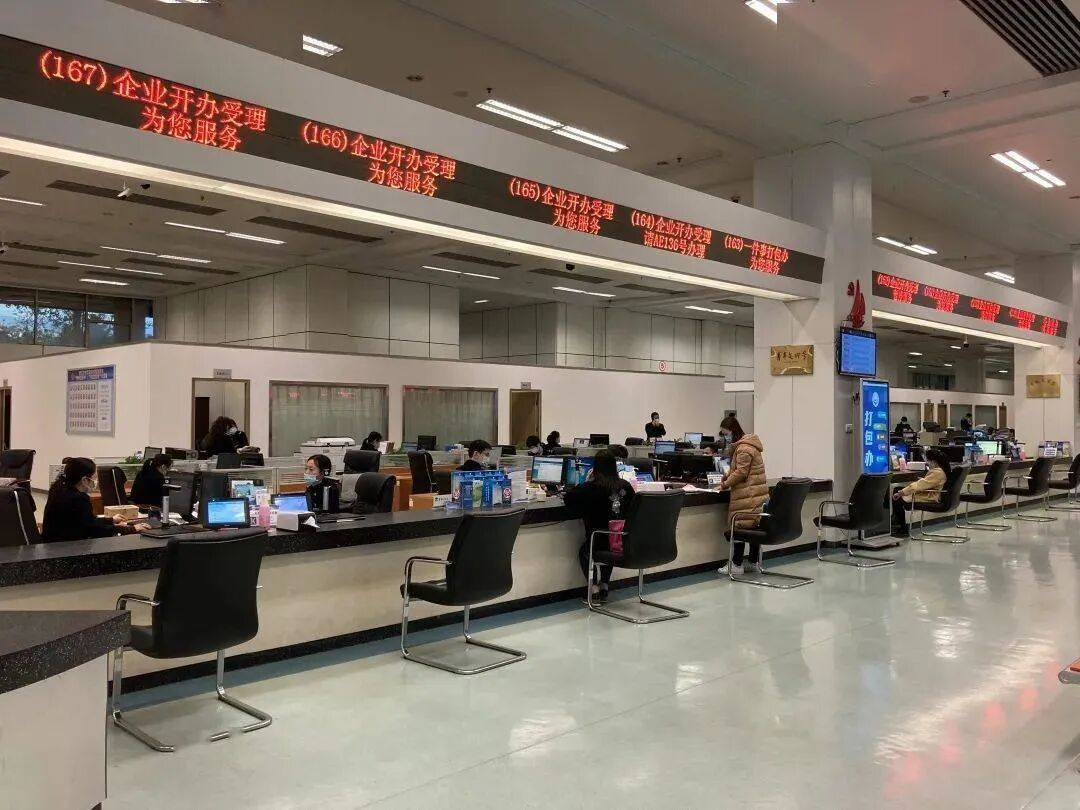
(4) What Amount of Registered Capital Is Appropriate for a Company in China?
- Can I start with RMB 100 million? Do not choose an arbitrary amount. Many start-ups enter a high amount of capital at registration because they believe a higher figure makes the company appear stronger for future contracts or tenders. The purpose of the subscription system and removal of the minimum capital requirement is to reduce start-up costs, not to encourage arbitrary capital amounts.
- Can I pay it in 100 years? Do not choose an arbitrary subscription deadline. The law does not prohibit a long deadline, and a shareholder's age is not itself a legal limit because the shareholder may transfer the contribution obligation to a new shareholder. However, a deadline extending beyond the shareholder's expected working life may make the company look like a shell. The deadline is therefore not better merely because it is longer.
- Under the subscription system, exaggerated promises still create tax costs. The market-regulation authority does not charge a registration fee, but the tax authority charges stamp duty at 0.05% of the registered capital. For example, RMB 10 million of registered capital results in RMB 5,000 of stamp duty. The tax is not avoided merely because capital has not been paid. When the company is deregistered, it must obtain a tax-clearance certificate and pay outstanding stamp duty before the certificate can be issued. At the same time, capital should not be set too low; a “one-yuan company” is largely theoretical.
- Principles for determining registered capital
- act within your means and set capital and the paid-in commitment according to business needs;
- use industry practice as a reference. Different industries have different capital expectations, so founders should check comparable businesses through China's National Enterprise Credit Information Publicity System; and
- increase gradually. Capital may be increased later. A start-up may set a relatively low amount initially and increase it when the business expands and can undertake greater obligations.
- An inflated subscription creates greater legal risk. Subscribed capital does not mean capital need never be paid; it only allows payment to be deferred during the early stage. The system has not changed the rule that a shareholder is liable up to the subscribed contribution. If the company enters liquidation with RMB 1 million of unpaid debt and registered capital of RMB 500,000, the shareholders may need to contribute RMB 500,000. If registered capital is RMB 1 million, they may need to contribute the full RMB 1 million. Even though there is no longer a minimum registered-capital requirement, the National Courts' Civil and Commercial Trial Work Conference Summary provides that a shareholder who uses little capital to engage in business beyond its capacity, showing no genuine intention to operate, may be abusing the company's separate personality and limited liability to shift risk to creditors. If the creditor's interests are seriously harmed, the court may impose joint and several liability on the shareholder. An inflated amount can therefore create unnecessary difficulty where the shareholder lacks the capacity to fund it. The appropriate amount should reflect the company's business and the individual's ability to bear risk.
02 Requirements for Registered Capital When Establishing a Company in Singapore
Singapore business forms include sole proprietorships, partnerships, limited liability partnerships, limited partnerships, private companies limited by shares (Pte. Ltd.) and public companies (listed companies). The most common form is the private company.
Every private company must register issued or share capital and paid-up capital. Issued capital is the capital issued to shareholders for subscription and may be as low as SGD 1. Paid-up capital is the capital actually paid by shareholders to the company and may be as low as SGD 0.
When registering a Singapore private company, the Accounting and Corporate Regulatory Authority does not require the capital to be fully paid and does not verify the capital. Non-payment does not prevent registration. However, to demonstrate the company's strength and creditworthiness, it is not advisable to register paid-up capital of zero. Where funds permit, the company should pay all or part of the issued capital.
(1) What Amount of Registered Capital Is Appropriate in Singapore?
The amount is mainly determined by business and risk considerations and can be assessed from internal and external perspectives.
- Internal discussions may include:
- how much the shareholders are willing to contribute and how much the directors need to start the business;
- whether the company is being established to invest in a project and, if so, the expected initial investment; and
- how much may need to be paid to creditors if the company is later deregistered and how much funding risk the shareholders can bear.
- External requirements and restrictions may include:
- a major business partner requiring a supplier to have a minimum amount of registered capital;
- a tender requiring bidders to have a minimum amount of registered capital; or
- a founder planning to immigrate to Singapore and needing a minimum capital amount to apply for a pass in the company's name.
The appropriate amount should therefore be assessed from many aspects of the company's operations. If the business is simple, mainly involves international trade and is not subject to external requirements, registered capital of several thousand Singapore dollars may be sufficient.
(2) Must Registered Capital Be in Singapore Dollars?
Singapore's local currency is the Singapore dollar (SGD). Singapore does not require a company's registered capital to be recorded in Singapore dollars and is flexible on this point. Most major currencies may be used, including USD, EUR, RMB, HKD and JPY. A company may even have capital denominated in more than one currency. Nevertheless, Singapore dollars are recommended.
(3) Is There a Minimum Paid-Up Capital?
There is no general minimum paid-up capital, so paid-up capital may be SGD 0. Certain regulated industries may, however, impose higher minimum requirements. Examples include:
- travel agencies: SGD 100,000 if accommodation is provided in Singapore, or SGD 50,000 if travel services are provided without accommodation;
- accounting firms: SGD 50,000;
- insurance intermediaries: SGD 300,000; and
- financial businesses, such as banks, which are subject to higher requirements and should be discussed with an adviser.
(4) Are There Restrictions on the Use of Registered Capital?
The registered capital of a Singapore private company can be understood as the start-up funding invested by shareholders for the company's business. There is generally no restriction if the funds are used for company operations, such as office supplies, raw materials, logistics, customs-clearance costs, management travel and labour costs. Use of capital remains subject to the company's constitution. Using it outside the constitution or improperly is unlawful and may lead to proceedings.
(5) What Are the Benefits of Higher Paid-Up Capital?
Paid-up capital reflects the company's strength and creditworthiness. If the company becomes insolvent, its paid-up capital, together with its remaining assets, is available to repay creditors. Higher paid-up capital may:
- provide more favourable debt-financing terms;
- give the company another financing option through equity, in addition to debt such as loans or bonds;
- help the company obtain lower interest rates and avoid charges over its assets. Compared with a company with only SGD 1 of paid-up capital, creditors may feel more confident about recovering their investment from a better-capitalised company;
- automatically make a Singapore-registered company with paid-up capital of at least SGD 500,000 a member of the Singapore Business Federation (SBF), giving access to networking and other activities; and
- for a start-up applying for work passes for directors, shareholders or employees, cover approximately one year's costs and serve as a positive factor in the application.
(6) Can Registered Capital Be Increased?
After registration, a Singapore private company may increase its registered capital at any time. The administrative procedure is simple and normally takes two to three business days after submission, without actual capital verification.
The procedure is:
- the shareholders and directors agree the additional share capital, the amount and allocation of shares, and instruct the corporate-secretarial company to prepare the resolutions and documents; and
- after the shareholders and directors sign, the statutory secretary submits the documents to ACRA.
Two points require attention:
- If a new shareholder joins, provide the passport or identity card and proof of address so that the secretary can prepare and retain the statutory documents.
- The Singapore Companies Act requires the increase and signed documents to be filed with ACRA within 14 days.
An increase represents greater shareholder investment and signals stronger prospects. Singapore's pro-business government generally facilitates such arrangements.
(7) Can Registered Capital Be Reduced?
Subject to conditions, ACRA permits a Singapore private company to reduce its registered capital.
There are generally two reasons for a reduction:
- The registered capital is excessive. Keeping it unchanged may leave capital idle, reduce capital efficiency and increase the burden of dividends.
- The company has suffered serious losses. The gap between total capital and actual assets has become so large that the capital no longer demonstrates the company's strength and shareholders receive no return because of the losses.
The procedure is much stricter than an increase because the law seeks to prevent people from using limited liability to avoid debts they should bear. To protect creditors and manage commercial risk, regulators commonly require the company to notify creditors and obtain consent. If known creditors are not notified, shareholders may bear supplementary liability and a reduction may even be held invalid.
Under Singapore's Companies Act, a private company must pass a special resolution. There are two routes:
- apply for approval from a Singapore court; or
- satisfy the Companies Act procedure, including:
- convening an extraordinary general meeting (EGM);
- each director satisfying the solvency requirements under section 78B;
- amending the constitution; and
- cancelling old share certificates and issuing new certificates.
The special resolution must be signed within 15 days after the solvency requirements are satisfied, to prevent changes in solvency during the process.
“Solvent” means that a company can pay its debts as they fall due. “Insolvent” means that it cannot pay debts when they fall due.
Capital reduction is relatively complicated and time-consuming and may take two to three months. The company may need professional assistance from accountants and lawyers, increasing the cost.
Conclusion
China and Singapore apply different rules to registered capital, but the basic principles are similar. Except in certain regulated industries, neither imposes a rigid capital amount and both use a subscription-based system. At incorporation, registered capital should not be set too high or too low; it should reflect the company's actual business. If necessary, the company can increase its capital later.
Appendix:
- To search Chinese company information, use the National Enterprise Credit Information Publicity System to check registered capital, business scope, legal representative, shareholders and litigation.
- To search Singapore company information, use ACRA's BizFile+ website to obtain registered capital, business scope, shareholders and directors.
For advice on Singapore company establishment and compliance, please contact the professional consulting team at Zhongxin Legal News.
—
This article is for information purposes only and does not constitute formal legal advice.
This article is general information and not legal advice. Specific matters require assessment by appropriately qualified professionals.